
Toyota facing supply chain issues
Japanese car manufacturing giant Toyota has warned customers that they might have to wait for up to four years for its new Land Cruiser SUV due to delays…
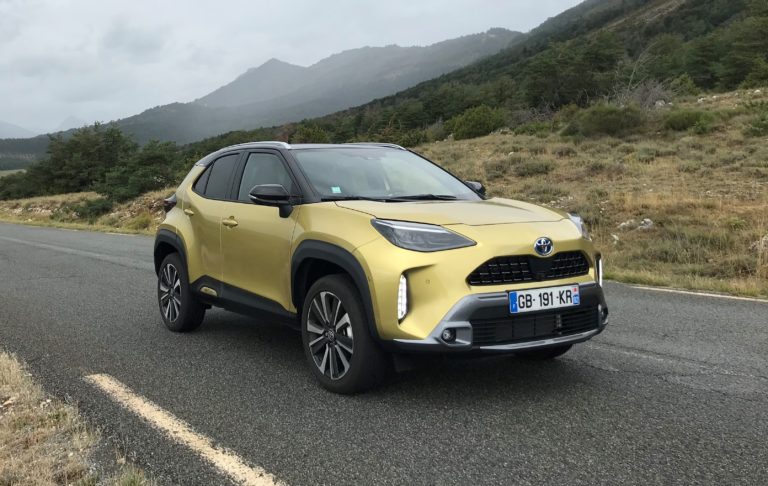
The Toyota supply chain model
Toyota are leading proponents of the ‘lean manufacturing’ model as they first developed their Toyota Production System in the 1940s, which quickly gained global influence as other companies adopted this methodology. There are two core concepts to the Toyota system, firstly ‘jidoka’, a form of intelligent automation where equipment is programmed to come to a halt when an issue arises to ensure that faulty products are not produced. The second concept is referred to as ‘Just-in-Time’, a concept where each step within the manufacturing process only produces what’s needed for the next one. These two concepts were put in place as part of an overall philosophy to eliminate waste during manufacturing and aim to work in the most efficient way possible, building on continuous improvement over the years. Toyota has sought to revise and improve upon its methodology since the events of 2011 and used the disruption to positive effect. Since their supply chain had been almost entirely cut off, the company worked alongside suppliers in Japan to produce a comprehensive database of supply chain information to support the Japanese manufacturing industry. Toyota also implemented a strategy which was devised to split the procurement of their supplies from three different sources, with the main one supplying 60% of materials. Dividing their raw material supplies up in this manner meant that should one part of their supply chain fall, they would have two backup options already in place. While it remains to be seen how Toyota will resolve its supply chain issues, an interesting development came in December when the company said that it is happy to use scratched or blemished parts from suppliers as the world's biggest car producer tries to trim costs amid a production-curbing global chip shortage and rising material costs. Toyota's acceptance of good enough by using parts it would have thrown away in the past marks a significant change both for a company renowned for stringent quality control and for Japanese manufacturing practices that have often prioritized perfection over speed to market. This may be the first hint at the direction Toyota might take in the future as it seeks to eliminate its supply chain issues. "We are careful about the outside of our vehicles, the parts you can easily see. But there are plenty of places that people don't notice unless they really take a good look," Takefumi Shiga, Toyota's chief project leader for vehicle development said during a press briefing.Related articles

Allied Elecronics launch Accelerate program for start-ups
Allied Electronics & Automation, a Texas-based omni-channel provider of product and service solutions, is pleased to announce the…
Read More
FREYR Battery to open landmark assembly plant in Atlanta
FREYR Battery, a developer of clean, next-generation battery cell production capacity, has announced that it has chosen and…
Read More
Department of Commerce looks for public help to restore US semiconductor industry to former glories
The U.S. Department of Commerce’s National Institute of Standards and Technology (NIST) CHIPS for America initiative has asked…
Read More