
The end of traditional just-in-time: the rise of strategic stockpiling
The traditional model of just-in-time and zero inventory came under serious scrutiny in mid-March 2026. The constant volatility of transport costs and the growing scarcity of certain components…
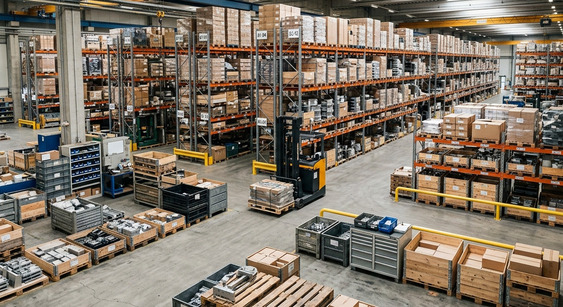
The traditional model of just-in-time and zero inventory came under serious scrutiny in mid-March 2026. The constant volatility of transport costs and the growing scarcity of certain components are forcing manufacturers to move away from ‘Just-in-Time’ in favour of ‘Just-in-Case’. This new approach involves establishing regional buffers and safety stocks to absorb fluctuations of 30% to 50% in demand without disrupting the service chain.
The factory of the future adapts by integrating micro-logistics hubs and modular storage spaces directly adjacent to consumption sites. This geographical shift reduces the number of kilometres travelled and aligns with the EU’s new environmental standards on CO2 emissions. Infrastructure flexibility thus becomes the number one performance criterion, overtaking the mere reduction of idle stock that left companies too vulnerable.
This transformation is accompanied by the complete digitisation of stock tracking. Thanks to the Internet of Things (IoT), inventories are updated in real time, avoiding data entry errors and optimising vehicle loading. By combining intelligent stock management with local logistics, companies are able to stabilise their operational costs despite rising energy and transport prices, thereby ensuring maximum reliability for their end customers.
Related articles

Supply Chain – The shift from ‘Just-in-Time’ to ‘Just-in-Case’
Supply chain management is undergoing a profound structural transformation in March 2026. After years of the just-in-time model…
Read More
Industry 4.0 and the challenge of cyber resilience
Industry 4.0 - The 2026 edition of the Global Industrie trade fair, held in Paris from 17 to…
Read More
Industrial cybercrime: towards multi-layered protection for Industry 4.0
Industrial cybercrime – Industry 4.0 is now facing a cyber threat of an industrial nature. In March 2026,…
Read More