
Supply Chain – The shift from ‘Just-in-Time’ to ‘Just-in-Case’
Supply chain management is undergoing a profound structural transformation in March 2026. After years of the just-in-time model dominating the sector, companies are shifting en masse towards a…
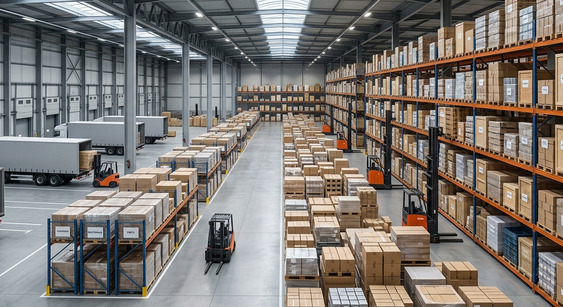
Supply chain management is undergoing a profound structural transformation in March 2026. After years of the just-in-time model dominating the sector, companies are shifting en masse towards a strategic stockpiling strategy known as ‘Just-in-Case’. This paradigm shift, driven by geopolitical uncertainties and climate disruptions, now prioritises resilience over pure cost optimisation. Connected warehouses are transforming into logistics data centres where real-time visibility of stock levels becomes the number one competitive advantage.
The full digitalisation of processes enables this new complexity to be managed. Thanks to agent-based AI, warehouse management systems (WMS) are now capable of autonomously reordering dispatch priorities in the event of a supplier delay. The concept of “zero stock” is giving way to smart “regional buffers”, located as close as possible to consumer markets. This relocation of logistics, or “nearshoring”, is accompanied by modular automation where mobile robots work alongside operators to maintain high throughput rates despite the diversity of product lines.
Finally, full transparency of supply flows is becoming the norm under pressure from ESG regulations. Every movement of goods is tracked, making it possible to calculate the precise carbon footprint of every product delivered. This ‘augmented supply chain’ uses blockchain technology to guarantee the integrity of traceability data, from the factory to the end customer. By 2026, logistics performance will no longer be measured solely by delivery speed, but by the supply chain’s ability to absorb shocks without disrupting service, whilst remaining ethical and sustainable.
Related articles
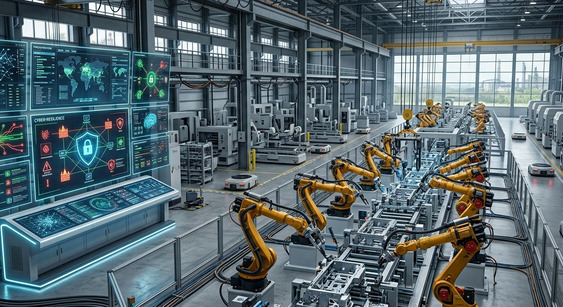
Industry 4.0 and the challenge of cyber resilience
Industry 4.0 - The 2026 edition of the Global Industrie trade fair, held in Paris from 17 to…
Read More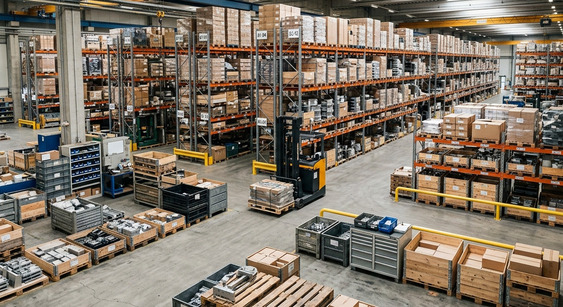
The end of traditional just-in-time: the rise of strategic stockpiling
The traditional model of just-in-time and zero inventory came under serious scrutiny in mid-March 2026. The constant volatility…
Read More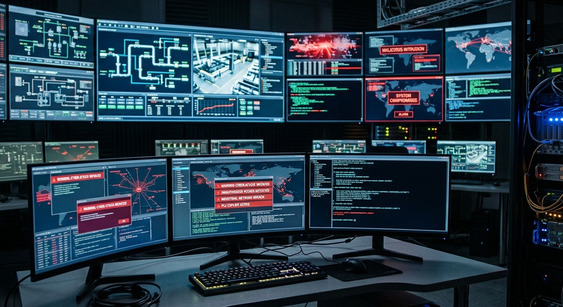
Industrial cybercrime: towards multi-layered protection for Industry 4.0
Industrial cybercrime – Industry 4.0 is now facing a cyber threat of an industrial nature. In March 2026,…
Read More