
Solution guide
Choosing Your Brazing Alloy for Jewellery: Complete Guide
High-quality brazing in the jewellery industry requires special ranges of metals. The metals used must also be suitable for the purpose. So it's worth asking the question: which brazing alloy should I…
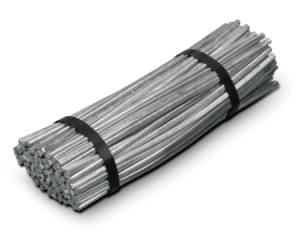
High-quality brazing in the jewellery industry requires special ranges of metals. The metals used must also be suitable for the purpose. So it's worth asking the question: which brazing alloy should I choose for jewellery? Choosing brazing alloy for jewellery: the complete guide.
Different Types of Brazing
The art of jewellery making may involve brazing two metals of different or similar types. In all cases, the assembly is carried out using a blowtorch. This equipment is used in particular to join brass, gold and copper.
The choice of brazing material is important, since the quality of the brazing depends on it. To ensure the solidity of the components to be soldered, the metals used must have good mechanical properties. In particular, they must be strong compared with the metals to be bonded, also known as base metals. The solder must also be able to wet well. All this to say that the characteristics of the brazing filler must be appropriate to the type of base metal.
So, for this article entitled: Choosing your brazing alloy for jewellery: the complete guide, the first thing to consider is the melting point. Each metal has its own melting point. This can be high, medium or low. For example, to solder silver, you can use silver, copper and zinc alloy solders. These metals have the advantage of a high melting point. However, their melting point decreases as they contain tin, cadmium or silicon.
In addition to melting point, brazing alloy for jewellery is also chosen according to colour. The colour of the brazing filler metal should be identical to that of the base metals, so that the colour remains the same after brazing.
The choice of grade is also important. This is the quantity of metal in the alloy: 10K (417), 14K (585), 18K (750), etc. The choice of grade is essential for brazing gold. The grade of the brazing alloy must be identical to that of the base gold.
Choosing Brazing Alloy for Jewellery: the Conditions for a Quality Result
To source your brazing alloy, use a specific company. They can supply various types of solder for jewellery professionals. They are used for brazing or soldering operations and for manufacturing specific parts.
For jewellery and artwork, the supplier is able to offer different types of alloys, pickling fluxes and specific products: ingots or wires, alloys in bars, powders, pastilles, granules, pickling gels, decorative resins, silicones for foundries, etc. These products can be designed for various applications.
These products can be designed for a variety of applications: pewter and antimony-based figurines, costume jewellery containing pewter or pewter pottery.
Choosing your Brazing Alloy for Jewellery by Recycling
For your art work in jewellery, opt for brazing alloys produced using an ecological and responsible manufacturing process. Choose products made from recycled materials. There is now a company in France that specialises in tin alloys, their recycling and brazing. Its products are very interesting if you are a company or a craftsman committed to conserving natural resources and preserving the planet. In particular, the specialist helps companies to recycle their non-ferrous metal waste. Its products meet the requirements of ISO 9453, NF EN611-1 and NF A 56-101.
Need more information? Send us your questions or request a quote via this page. Our expert partners will get back to you promptly
Your request about or equivalent
Choosing Your Brazing Alloy for Jewellery: Complete Guide
factoryfuture Trusted by

Get Information, a Quote and Options
Get a respond about your need in less than 24h about your product or an equivalent product
