
Industrial robotics – The rise of humanoid robots as industrial partners
Industrial robotics is undergoing a profound transformation. Previously confined to repetitive tasks within safety cages, the new humanoid robots are now being integrated directly onto production lines alongside…
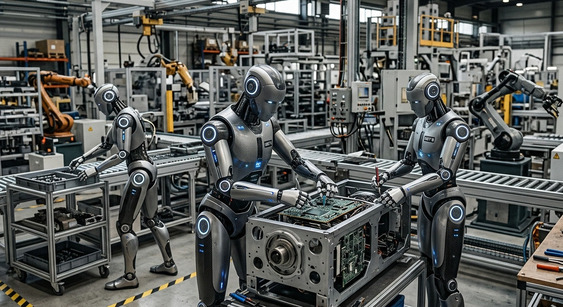
Industrial robotics is undergoing a profound transformation. Previously confined to repetitive tasks within safety cages, the new humanoid robots are now being integrated directly onto production lines alongside operators. Unlike traditional articulated arms, these versatile machines are designed to operate in environments built for humans, without requiring a costly overhaul of the factory infrastructure.
This acceleration in robotisation is primarily a response to a global labour shortage in the most physically demanding roles. Thanks to the integration of generative AI and state-of-the-art vision sensors, these robots can now understand complex instructions in natural language and adapt to variations in workflow without extensive reprogramming. The aim is no longer merely pure automation, but the creation of human-machine teams capable of handling tasks requiring fine motor skills.
For businesses, this deployment marks a full-scale entry into the factory of the future. The convergence of mechanical power and software intelligence enables unprecedented flexibility on the production line. Initial feedback indicates a significant reduction in musculoskeletal disorders among employees, whilst maintaining a stable production rate, even for limited runs.
Related articles

Supply Chain – The shift from ‘Just-in-Time’ to ‘Just-in-Case’
Supply chain management is undergoing a profound structural transformation in March 2026. After years of the just-in-time model…
Read More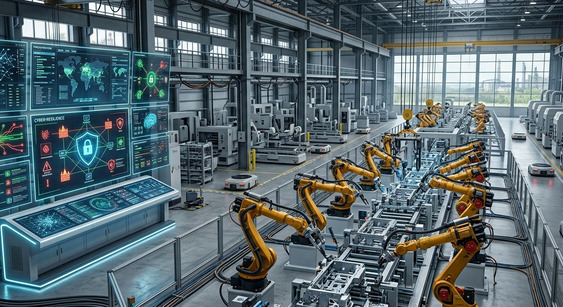
Industry 4.0 and the challenge of cyber resilience
Industry 4.0 - The 2026 edition of the Global Industrie trade fair, held in Paris from 17 to…
Read More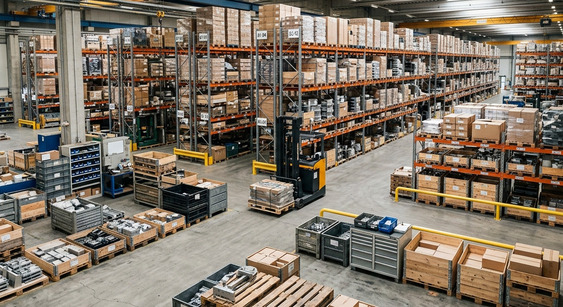
The end of traditional just-in-time: the rise of strategic stockpiling
The traditional model of just-in-time and zero inventory came under serious scrutiny in mid-March 2026. The constant volatility…
Read More