
Featured Articles
Cobots - solution to the welder shortage crisis?
One of the biggest problems for many companies is to fill trade positions, such as machinists, welders, sheet metal workers, plumbers and others, who are all in short…
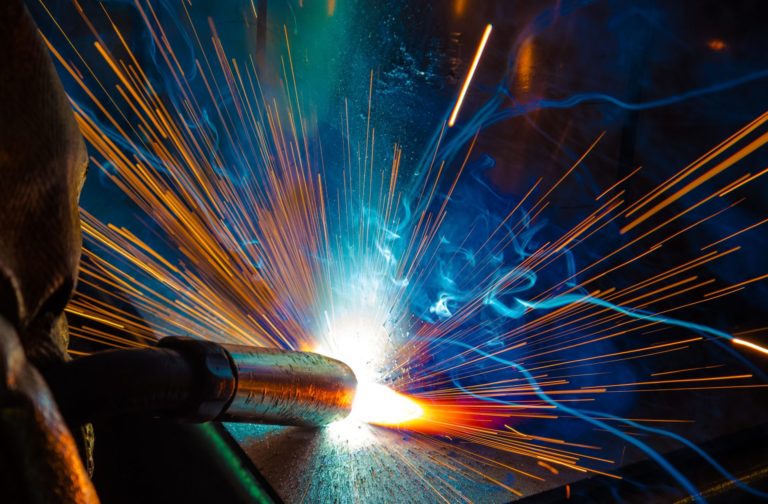
One of the biggest problems for many companies is to fill trade positions, such as machinists, welders, sheet metal workers, plumbers and others, who are all in short supply. Although the shortage of these skilled workers has been anticipated for decades, the very particular circumstances of the past few years have given rise to the perfect storm.
Due to many factors such as COVID-19 restrictions, supply chain issues, and so on, trade positions have been hard to fill, with much more demand than supply. Unfortunately, the trade school pipeline has also been further damaged by years of schools favoring college education over trade schools which has ultimately led to today’s situation where more experienced professionals leave the trades than students entering them.
Welders in particular are in very short supply with the American Welding Society (AWS) and WeldingWorkforceData projecting that 314,000 new welders will need to enter the workforce by 2024, according to current trends.
Although a part of the welder shortage can be attributed to growth in industry and current unfilled openings, perhaps the most disturbing trend is that welders are leaving the industry due to retirement or career advancement with nobody filling their roles. According to the latest AWS estimates, 160,000 of the 750,000 welders currently in employment are close to retirement age.
It is highly unlikely that welders will be replaced by robots, however skilled welders can partner up with collaborative robots (cobots) with the general idea being that the welder trains the cobot to perform dangerous or repetitive welds.
This is envisaged as a solution to the welder shortage since, unlike traditional welding robots, cobots can safely share space with humans. In comparison to a welding robot, which may need to be placed in a cage or surrounded by a light curtain, cobots can assist welders in their tasks and are equipped with intelligent sensors to keep the human safe.
If we consider the case of a difficult, heavy assembly with multiple welds, then the cobot may be used to hold the pieces together to allow the welder to perform a few tack welds. Since it is a cobot, it is capable of positioning the pieces properly while also not being in danger from the weld's heat.
Once the piece has been tacked together, the human and cobot can then weld in unison, each completing their own welds for the finished part. The completed, heavier part can then be moved using the cobot and the next pieces retrieved.
As things currently stand, cobots are trained by human welders to perform repetitive motions. The industry hopes that, depending on the application and cobot, this training process can be carried much more easily than with existing welding robots.
This belief is due to the fact that modern cobots can be programmed with machine vision instead of having to work through three-space and programming x,y,z coordinates for each weld. This should make robot programming much more accessible to people skilled in welding without having to learn complex computer programming.
One of the major advantages of using cobots to carry out welding is that hazardous welding tasks could be handed to a well-trained cobot to perform, thus saving lives and limbs. High-risk jobs, such as initial large piece assembly, pressure vessel cutting, empty fuel storage containers, and perhaps some underwater welding operations, could eventually be carried out by a cobot rather than a human. Other risky welding operations such as decommissioning fuel storage tanks or welding in confined spaces might also be entrusted to cobots, thereby adding an extra level of safety to dangerous tasks.
 Industry leaders are also convinced that, as artificial intelligence (AI) routines improve, cobots will help improve the speed and quality of welded assemblies in industry. It is expected that a cobot of the future may be able to autonomously perform pipe inspections and welds in hazardous environments without putting human welders at risk. For example, welding cobots could possibly be installed on pipeline inspection gauges (PIGs) to detect and repair leaks as the PIG travels through the pipeline.
In addition to lifting heavy, hot pieces, and performing repetitive welds, welding cobots of the future may have built-in inspection capabilities such as using embedded ultrasonic sensors to ensure that welds are clean and free of slag inclusions. Industry experts also hold out the hope that cobots will be able to analyze the flame of oxygen-acetylene torches and optimize the flame properties for any particular situation.
All these potential uses mean that cobots may yet live up to the “collaborative” part of their name, working alongside welders rather than replacing them.
Industry leaders are also convinced that, as artificial intelligence (AI) routines improve, cobots will help improve the speed and quality of welded assemblies in industry. It is expected that a cobot of the future may be able to autonomously perform pipe inspections and welds in hazardous environments without putting human welders at risk. For example, welding cobots could possibly be installed on pipeline inspection gauges (PIGs) to detect and repair leaks as the PIG travels through the pipeline.
In addition to lifting heavy, hot pieces, and performing repetitive welds, welding cobots of the future may have built-in inspection capabilities such as using embedded ultrasonic sensors to ensure that welds are clean and free of slag inclusions. Industry experts also hold out the hope that cobots will be able to analyze the flame of oxygen-acetylene torches and optimize the flame properties for any particular situation.
All these potential uses mean that cobots may yet live up to the “collaborative” part of their name, working alongside welders rather than replacing them.
Industry leaders are also convinced that, as artificial intelligence (AI) routines improve, cobots will help improve the speed and quality of welded assemblies in industry. It is expected that a cobot of the future may be able to autonomously perform pipe inspections and welds in hazardous environments without putting human welders at risk. For example, welding cobots could possibly be installed on pipeline inspection gauges (PIGs) to detect and repair leaks as the PIG travels through the pipeline.
In addition to lifting heavy, hot pieces, and performing repetitive welds, welding cobots of the future may have built-in inspection capabilities such as using embedded ultrasonic sensors to ensure that welds are clean and free of slag inclusions. Industry experts also hold out the hope that cobots will be able to analyze the flame of oxygen-acetylene torches and optimize the flame properties for any particular situation.
All these potential uses mean that cobots may yet live up to the “collaborative” part of their name, working alongside welders rather than replacing them. Related articles
March 23, 2026
Industry 4.0 and the challenge of cyber resilience
Industry 4.0 - The 2026 edition of the Global Industrie trade fair, held in Paris from 17 to…
Read More
March 16, 2026
Industrial cybercrime: towards multi-layered protection for Industry 4.0
Industrial cybercrime – Industry 4.0 is now facing a cyber threat of an industrial nature. In March 2026,…
Read More
March 9, 2026
Industrial robotics – The rise of humanoid robots as industrial partners
Industrial robotics is undergoing a profound transformation. Previously confined to repetitive tasks within safety cages, the new humanoid…
Read More