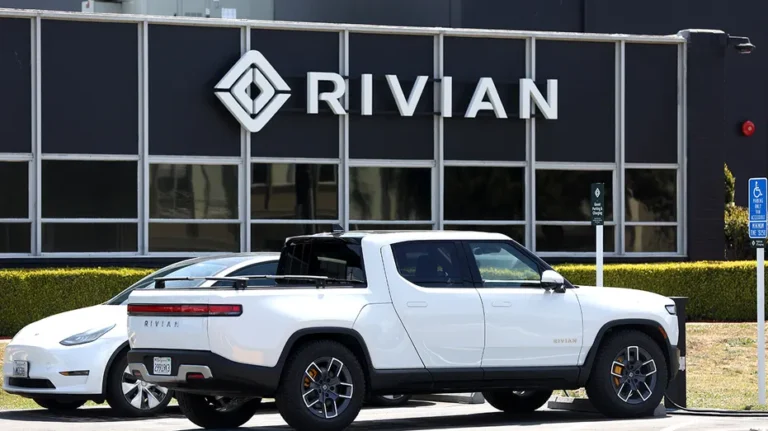
The founder and CEO of Rivian Automotive Inc., RJ Scaringe, yesterday claimed that the supply chain was loosening up in "powerful ways" and that he expected his team's second shift in Illinois to be at full capacity by springtime. Scaringe revealed that slower growth in other parts of the economy is helping to ease supply chain issues for the electric vehicle manufacturer.
Speaking to an investor conference hosted by research firm Redburn, Scaringe said the work his team has been doing to solidify and grow relationships with suppliers has been greatly helped by a softening demand in certain sectors, especially for chips.
“The supply chain being less overpressurized is actually helpful, particularly with semiconductors,” Scaringe said. “We’ve seen that space and across the various stages of supply chain start to loosen up in powerful ways that we think are going to alleviate a lot of the challenges that we had throughout this year.”
A reduction in supply chain issues is very welcome news for California-based Rivian, particularly as the company lost five days of production early this quarter because of a shortage of chips and is targeting growth of 45% from Q3 to meet its full-year goal of making 25,000 vehicles at its Normal, Illinois, plant—versus 1,015 in 2021. Scaringe said Rivian’s suppliers have stepped up throughout 2022, quite often with help from the company, in a drive to meet that higher output goal. Scaringe also added that Rivian executives now feel much more confident about the outlook for 2023 and beyond.
“Each supplier has to go through their own associated challenges with ramping,” he said. “We’ve seen those ramps occur and we’ve seen our confidence grow with those suppliers and vice versa.”
Scaringe also revealed some details of Rivian’s medium-term plans to built its own battery cells alongside a growing supplier network— he disclosed the company has signed some yet-to-be-announced deals—and wider range of batteries. Scaringe claimed that the company has been boosted by passage of the Inflation Reduction Act and as a consequence Rivian should be making some of its own batteries in the second half of this decade.
He also stated that the company’s second shift in Illinois, which was launched a few months ago, should be running at 100% capacity by the end of the first quarter. Scaringe took the opportunity to reference Rivian’s potential to hike prices for its R1S SURV and R1T truck models, which are lower than several similar products on the market. Scaringe admitted that the vehicles were “clearly underpriced” when they were first launched—an attempt last year to hike prices, including for customers who had already placed orders, backfired—and that the company’s dual-motor and quad-motor options will allow it to lift prices and narrow its losses.
Shares of Rivian rose by nearly 1% on Nov. 29 to close at $28.85, in contrast to recent stock market performance which has seen shares fall by around 8% over the past six months, trimming the company’s market valuation to about $25 billion.